Claude Haiku 5.5 arrives as Anthropic’s cheapest, fastest small model for subagents and browser use
October 7, 2026 · via Anthropic
Agentic AI is the next layer above generative AI: systems that pick tools, take actions, and recover from failure without a human in the loop on every step. This hub gathers the architecture patterns, cost-control techniques, and production lessons that make agents work outside the demo.
An agent is not a chatbot with extra prompts. It is a system that picks a tool, takes an action against the real world, observes the result, and decides what to do next — with exit conditions, retries, and a budget. The difference between a prototype and a production agent is almost entirely in the boring parts: scope, observability, evaluation, and tool design.
Use an agent when the work is multi-step, the steps depend on the previous outputs, and at least one step needs reasoning that scripts cannot encode. Skip agents for deterministic ETL, single-call classification, and any pipeline that runs the same five steps every time — those are scripts, and scripts are cheaper and more reliable.
Pre-agentic data fetching, supervisor-vs-handoff orchestration, descriptive tool names, "when to use" descriptions on every tool, exit conditions on every loop, prompt caching as a first-class metric, evaluation datasets that go beyond the happy path, observability per step. These are the patterns we drill in training and ship in consulting.
On October 7, 2026 GitHub made Copilot local sandboxing generally available, Anthropic shipped Claude Haiku 5.5, and Copilot added Haiku plus Ollama model discovery. This guide shows how enterprises should harden agent tool execution and retier high-volume subagent lanes.
On October 6, 2026 Mistral opened a public preview of Mistral Large 4, a roughly 1.05T multimodal MoE with 52B active parameters and weights planned by month end. The same day Atlassian rebuilt its enterprise MCP server and Google DeepMind shipped EmbeddingGemma 2 for on-device retrieval. This guide places those releases on an enterprise routing board.
On October 3, 2026 Aleph Alpha released Kolibri-1 under Apache 2.0: a 78B MoE with 3.46B active parameters, bilingual DE/EN specialization, reasoning, and tool calling. This guide explains how enterprises should place it on a routing board versus closed frontier coding models.
On October 5, 2026 Google shut down antigravity-preview-05-2026. The same day GitHub began scanning Pydantic AI gateway keys. This checklist covers the agent ID swap, breaking local tool schemas, and credential hygiene for production agent fleets.
Between September 21 and 29, 2026 OpenAI, Anthropic, and xAI shipped cheaper frontier coding models while GitHub put them into Copilot. This guide explains what changed, which Preparedness and safeguard labels still apply, and how enterprises should re-bench planner and worker lanes.
On October 1, 2026 GitHub put computer use in public preview in Copilot CLI and the Copilot app. Combined with October 2 Copilot model deprecations and Alibaba’s September 20 Qwen3.8-Omni-Flash launch, agent platforms now span GUI desktops and native audio-video tool loops. This guide covers controls, cutovers, and where omni models belong.
Between September 10 and 17, 2026 OpenAI, Cursor, and Anthropic each shipped a coordinator-style surface for long-running agent work. This guide explains what changed, how the three approaches differ, and how enterprises should pilot them without losing human merge control.
On September 10, 2026 DeepSeek released V4.1 Flash as a new multimodal architecture family member with aggressive KV-cache compression for long agent runs. This guide covers what changed, what the Pro alias cutover means, and how to re-bench worker lanes.
On September 8, 2026 Meta launched Muse, a personal AI agent that runs on a dedicated Muse Secure VM with a separate Sentinel permission authority and Stripe Link checkout for agent purchases. This guide extracts the architecture patterns enterprises can reuse for computer-use and connector-heavy agents.
On September 8, 2026 OpenAI published a Navier-Stokes Millennium Prize formulation result produced by coordinating agents and verified in Lean with GPT-6 Astra. Combined with Anthropic’s recent FLT formalization, the week shows how multi-agent research systems and machine checkers are becoming operational practice.
On September 4, 2026 Anthropic reported that Claude agents produced the first complete computer-checked proof of Fermat’s Last Theorem in Lean after 11 largely autonomous days on Prove2Me. The result is a practical blueprint for long-horizon multi-agent verification, not only a mathematics milestone.
On September 4, 2026 GitHub made GPT-6 Astra generally available in Copilot and published a weekly release that expands Fable 5.1 and Gemini 3.8 Flash access while putting Agent Merge into public preview. This guide covers what changed and how enterprises should enable the new agentic coding lanes.
OpenAI released GPT-6 Astra on September 3, 2026 as its most capable broadly deployed model for coding, computer use, research, and long-horizon agent work. It is also OpenAI’s first model to reach Critical cybersecurity capability under the Preparedness Framework. This guide explains what changed, who should enable it, and how to route it safely against Sol and Fable 5.1.
Meta released Muse Spark 1.3 on September 2, 2026 with stronger long-horizon agent collaboration, cleaner coding style, and lower tool-call overhead. The model is available through Muse Code and the Meta Model API. This guide explains the practical routing implications for platform and engineering teams.
On September 1, 2026 Anthropic shipped Claude Fable 5.1 and Claude Mythos 5.1 for long-running coding and knowledge work. Same list prices as Fable 5 except cache reads drop 75% to $0.25 per million tokens. Forced tool use breaks. Thinking blocks bind tighter. Here is the migration sequence I run before flipping planner lanes.
Google shipped Gemini 3.8 Flash and Gemini 3.8 Flash Cyber on September 2, 2026, the third Flash release in six weeks. Standard 3.8 Flash stays at the $0.75 / $3.75 introductory rate through year-end. Flash Cyber and the Fairwind Program gate vulnerability discovery and patching for trusted defenders. Here is how I update routing boards without treating Cyber as a casual coding model.
Between August 21 and August 26, 2026, DeepSeek, Z.ai, and Alibaba Qwen each expanded the cheap, multimodal, or open-weight worker layer that production agent stacks rely on. This guide explains what shipped, how the releases differ, and how to place them on a routing board without confusing experiments with production defaults.
Between August 13 and August 26, 2026 the cheap and mid lanes moved again: DeepSeek GA plus peak/off-peak rates, Alibaba Qwen3.8 open weights, Grok 4.6 on Amazon Bedrock, OpenAI Ultrafast Sol, and Sol promotional pricing. Here is the updated routing board I use so Chinese open models, Bedrock governance, and Sol speed tiers do not collide.
On August 18–19, 2026 Anthropic graduated browser use and computer use toolsets, the Files API, and Agent Skills off beta headers on the Claude API. The same window finished Cowork on web and mobile for paid plans and added Gmail/Drive write actions with approval defaults. Here is the builder sequence I use so GA toolsets do not become an unsupervised outbound email machine.
On August 11, 2026, xAI opened Grok Bot early beta: always-on AI teammates with a persistent cloud computer, available on SuperGrok Heavy, Cursor Ultra, and Cursor Teams Premium (desktop and iOS). The product pitch is finishing work in the real apps. The production detail that matters is sharper: every Bot you create shares one user-scoped cloud computer (files, browser sessions, app logins). Here is how I hand off real jobs, set request boundaries and Auto Review, and refuse to treat separate Bots as a security boundary.
Between July 31 and August 12 we got DeepSeek V4-Flash public beta, Qwen3.8-Max on Alibaba Cloud, and Grok 4.6 for long-running agents. List prices look similar at the top. Behavior does not. Here is how I redraw planner vs worker lanes around cost per completed task, what I refuse to claim yet about open weights, and the checklist I use before a new model ID touches production routing.
Agent Plugins 1.0.0 landed as an open standard on August 6, then hit GA in VS Code, Copilot CLI, and the Copilot app on August 12. One plugin.json can carry skills/ and optional mcp.json across launch clients, with vendor extras under reverse-domain namespaces. Here is how I package it, the mistakes I expect, and the honest gap that Claude Code is not on the launch client list.
Between August 5 and August 12, 2026 Anthropic shipped five enterprise-facing controls that only make sense together: Cowork in Chrome, Compliance API for Cowork and Claude Code transcripts, Auto mode as the Pro/Max/Team default, self-hosted runners in your network, and inference hooks for DLP. Here is how I sequence the rollout for Team versus Enterprise.
On August 10, 2026 OpenAI expanded Daybreak: Blue for defensive work with frontier models, Red for purpose-trained cyber models including GPT-5.6-Cyber under identity checks and legal attestation. Pair that with Codex safer auto-review defaults and the July 31 sandbox escape checklist. Do not put Cyber in your production coding loop.
On July 30, 2026 Anthropic disclosed three incidents where Claude models reached live production systems during third-party cybersecurity evaluations. The root cause was a harness misconfiguration that left internet access open while prompts claimed there was none. Here is the defense-in-depth checklist I now require before any capture-the-flag or offensive agent eval.
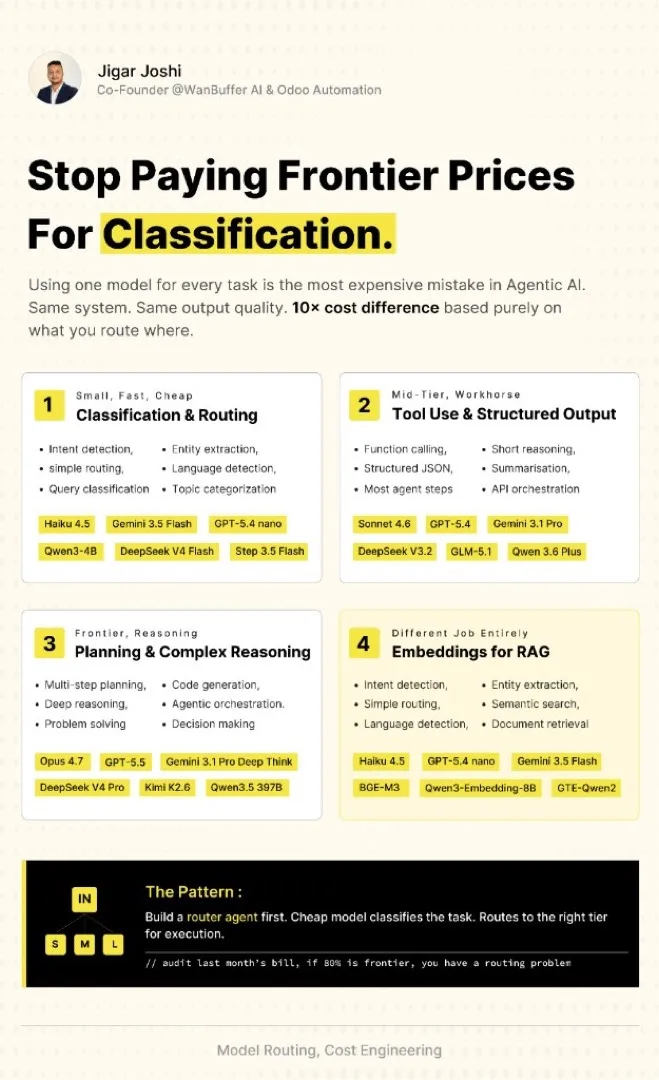
Cursor's July 2026 swarm write-up rebuilt SQLite in Rust from the docs and measured planner vs worker spend. Frontier-only GPT-5.5 hit about $10.5k; Opus 4.8 planning with Composer 2.5 workers landed near $1.3k at similar quality. Here is how I translate that into routing rules for production graphs.
July 28 shipped. MCP's fifth spec release makes the protocol stateless at the core, hardens OAuth, graduates Tasks and Apps into a versioned extensions framework, and updates Tier 1 SDKs. Here is what I verify in the first 48 hours that the pre-GA checklist could not prove until clients actually moved.
The MCP 2026-07-28 final specification publishes July 28. You already did inventory, header security, and handle migration. These four days are cutover discipline: freeze pins, delete sticky sessions only after round-robin passes, confirm cacheScope with two identities, and staff an on-call window for clients still sending Mcp-Session-Id.
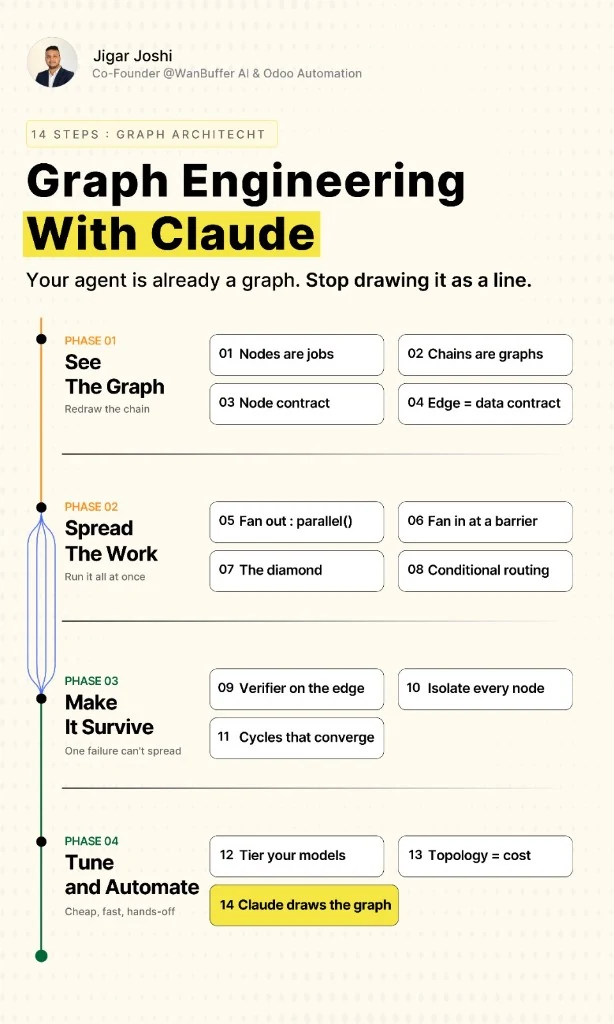
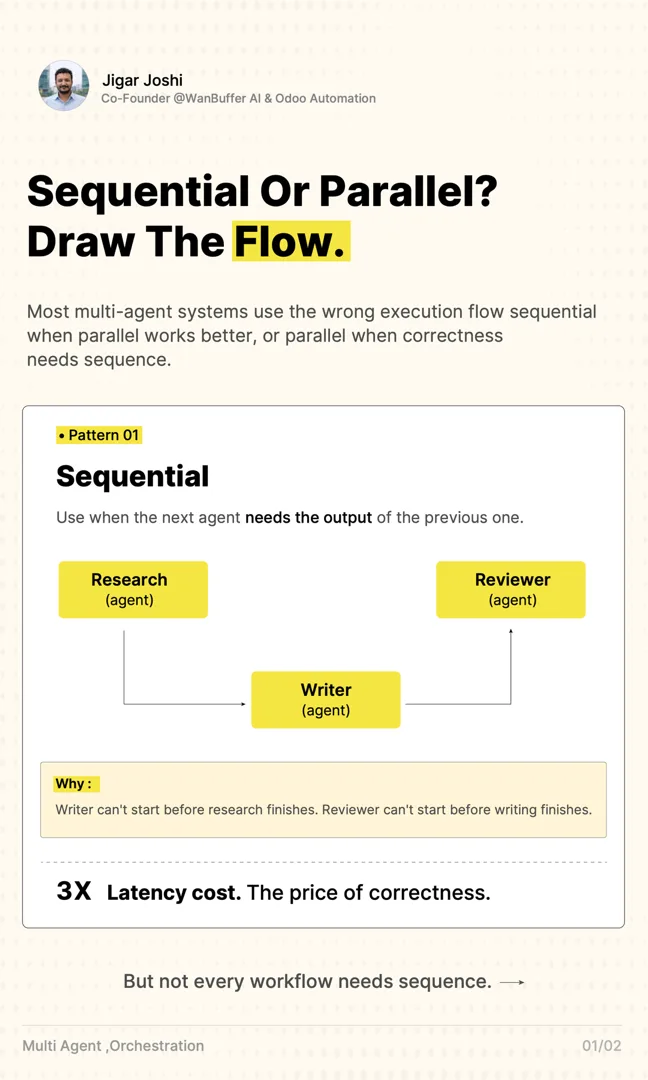
A straight-line agent is a degenerate graph. Claude Code dynamic workflows move orchestration into JavaScript so subagents fan out, verify, and converge without stuffing every intermediate result into one context window. Here is the 14-step roadmap I map onto production work, with topology diagrams, contracts, and the patterns I already ship.
On July 21, 2026 Google released Gemini 3.6 Flash ($1.50/$7.50 per million), 3.5 Flash-Lite ($0.30/$2.50, ~350 tok/s), and a limited-access 3.5 Flash Cyber via CodeMender. Gemini 3.5 Pro stays in partner testing. Here is how I re-benchmark cost per completed task against Sonnet 5 and Fable without betting the roadmap on Pro.
Claude Code Week 29 (July 13–17, v2.1.207–v2.1.212) lets published artifacts call MCP connectors on each view through the viewer's own connections, with first-call approval. Public sharing links, editor roles, screen reader mode, and auto-background for long MCP calls shipped in the same window. Treat live artifacts like production integrations, not pretty exports.
In mid-July 2026, reporting put Google, Microsoft, Salesforce, Snowflake, and ServiceNow behind a shared enterprise agent backend protocol framed as a counter to Anthropic's MCP. Protocol wars are procurement stories dressed as plumbing. Here is how I keep tool contracts, auth, and gateways portable while MCP 2026-07-28 still ships on July 28.
Claude Code Week 28 (July 6–10, releases v2.1.202 through v2.1.206) shipped a sandboxed in-app browser on Desktop and upgraded /doctor from a read-only report into a repair tool. Auto mode also blocks transcript tampering. Here is the governance checklist I run before teams turn browsing and auto-fix on for every engineer.
The MCP 2026-07-28 spec publishes July 28 with a stateless core: no initialize handshake, no Mcp-Session-Id, routing on Mcp-Method headers, and application state as explicit tool handles. Week 3 is where teams either mint basket_id-style handles or learn from 502s. Here is the sprint checklist I run 18 days before GA.
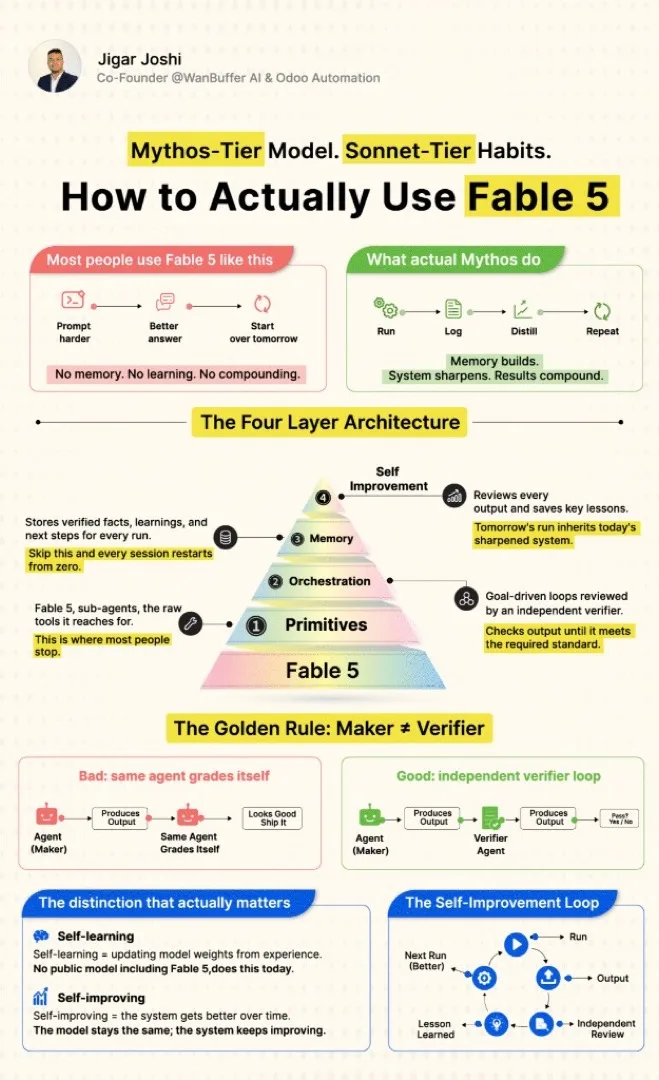
Most teams prompt harder, get a better answer, and start over tomorrow. That is not compounding. Self-learning updates model weights from experience; no public model including Fable 5 does that today. Self-improving means the system gets better: run, log, distill, repeat. The golden rule is maker ≠ verifier. Here is the four-layer architecture and loop patterns I ship.
Anthropic shipped Claude Cowork on mobile and web July 8, starting with Max subscribers. Usage data from 1.2 million sessions shows more than 90% of Cowork work is non-technical: memos, RFP reviews, inbox triage, decks. Tasks run in the cloud, sync across devices, and continue when you close the app. Here is how I govern Cowork without treating it like a coding agent.
Fable 5 is back globally, but most teams use it like a bigger Sonnet: prompt harder, better answer, start over tomorrow. Mythos-tier models need Mythos-tier systems: primitives, orchestration, memory, and self-improvement. The golden rule is maker ≠ verifier. Here is the architecture I draw on every engagement after the July 7 billing cliff.
The 2026-07-28 MCP spec drops sticky sessions and routes on Mcp-Method and Mcp-Name headers. That is a scaling win and a new exfiltration surface. Akamai and SecurityWeek flagged desync risk and accidental API-key mapping into headers visible to load balancers. Here is the pre-GA security checklist I run on gateways and remote servers.
Anthropic shipped Sonnet 5 on June 30 as default on Free and Pro chat and as claude-sonnet-5 on the Platform API at $2/$10 per million through August 31. Three breaking changes matter for agent builders: adaptive thinking on by default, manual extended thinking removed, and non-default sampling parameters return 400. The tokenizer adds roughly 30% tokens for the same text. Here is the swap checklist.
Anthropic restored Claude Fable 5 worldwide on July 1 after US export controls lifted June 30. Pro through Enterprise plans get up to 50% of weekly usage limits included through July 7, then usage credits. A new safety classifier blocks the Amazon-reported jailbreak in 99%+ of cases. Here is how I re-promote Fable without repeating June's config chaos.
Codex app 26.616 adds Record and Replay on macOS: perform a workflow once, Codex packages it into a skill you replay with different inputs. Thread handoff and automation run history ship alongside. Computer Use must be enabled. Here is the review checklist I run before any recorded skill runs unattended.
GitHub added ai_credits_used to the Copilot usage metrics API on June 19. It is a per-user total, not yet split by feature or model, but it closes a gap I have been papering over with spreadsheets. Here is how I unify Copilot credits with Claude API keys and Cursor team usage into one attributable spend view.
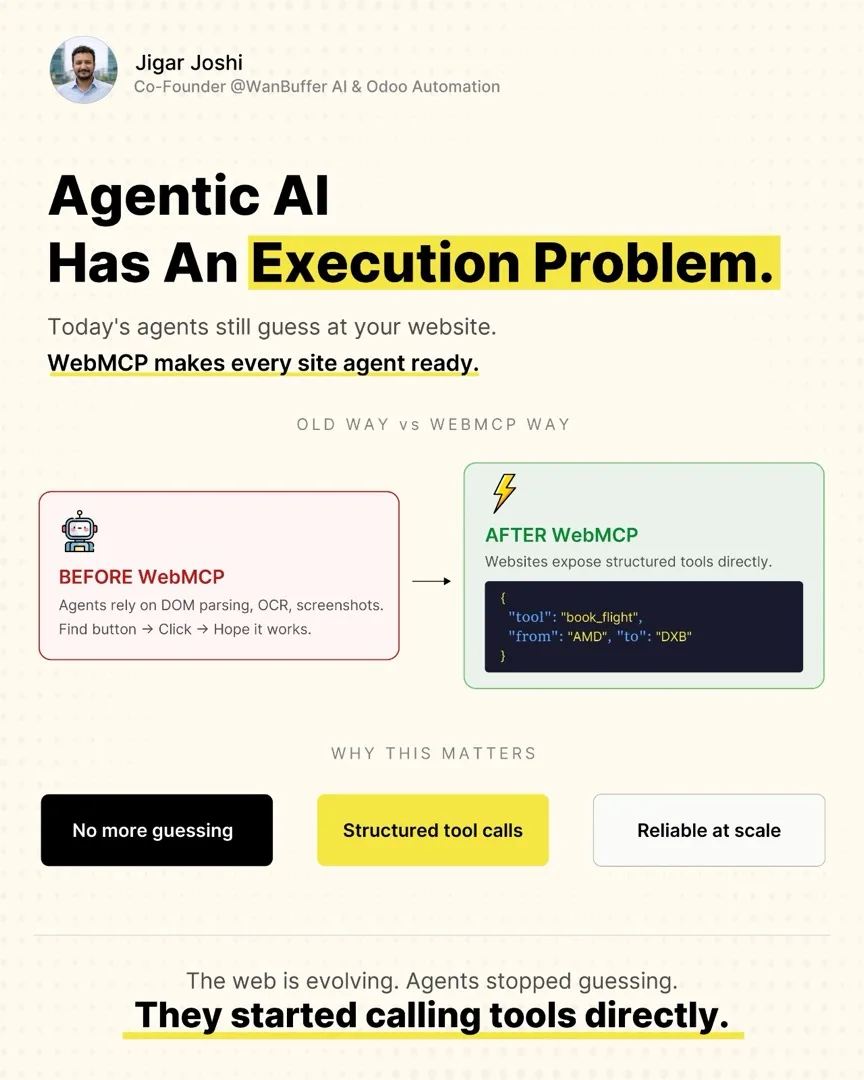
The 2026 MCP release candidate locked May 21. The final spec lands July 28 with a stateless core: no initialize handshake, no Mcp-Session-Id, routing on Mcp-Method and Mcp-Name headers. Here is the pre-GA checklist I run on remote servers, gateways, and clients so production does not learn about the change from a 502.
Anthropic launched Claude Fable 5 on June 9, promised included subscription access through June 22, then suspended Fable and Mythos 5 globally on June 12 after a US export-control directive. Most teams never finished piloting. Here is the governance checklist I use when capability, retention, pricing, and access can flip faster than your rollout calendar.
Artifacts in Claude Code beta publish self-contained HTML to claude.ai that republishes to the same URL as the session progresses, with version history and org-only sharing. Strict CSP, no external fetch, no backend. Requires Team or Enterprise and claude.ai login. Here is the workflow I use for PR walkthroughs and incident timelines without screenshot threads in Slack.
EMA makes the organization IdP the decision-maker for which MCP servers a user can reach. Admins enable connectors once; clients exchange an Identity Assertion JWT for scoped tokens without redirecting every employee through OAuth per server. Anthropic ships it across Claude, Claude Code, and Cowork; VS Code supports it; Okta is the first IdP. Here is the pilot I run before July 28 stateless transport work lands.
Cursor 3.7 lets you spin subagents in cloud VMs with /in-cloud, iterate on a PR until merge-ready with /babysit, and hand off between local and cloud sessions. Cursor 3.8 adds /automate and five GitHub review triggers. Here is the workflow I use so parallel cloud work does not bypass Auto-review, environment snapshots, or pre-push /review.
Tenet Threat Labs injected a fake stack trace through a public Sentry DSN and watched 100+ coding agents execute attacker commands during normal triage. No git write access required. The agent treats the error as ground truth. Here is how I harden observability MCP feeds, scope triage prompts, and block auto-exec on untrusted telemetry.
Two Anthropic changes land on the same day: programmatic Claude usage moves to a separate monthly credit pool, and claude-opus-4-20250514 plus claude-sonnet-4-20250514 stop answering on the API. Interactive Claude Code is fine. Cron jobs and CI agents are not. Here is how I audit auth paths, claim credits, and grep for retiring model IDs before the first failed run.
Cursor Auto-review uses permissions.json autoRun.allow_instructions and block_instructions so low-stakes shell/MCP calls flow and high-stakes actions pause. Here is how I wire that pattern into local agents, SDK headless runs, and CI — without mistaking a classifier for a hard security boundary.
Anthropic shipped Claude Fable 5 on June 9: a Mythos-class model with tiered safeguards, mandatory 30-day retention on traffic, and $10/$50 per-million pricing. Days later access was suspended globally pending export-control review. Even if you never touched Fable, the launch tells you how frontier routing, retention policy, and governance will work for agent builders in the second half of 2026.
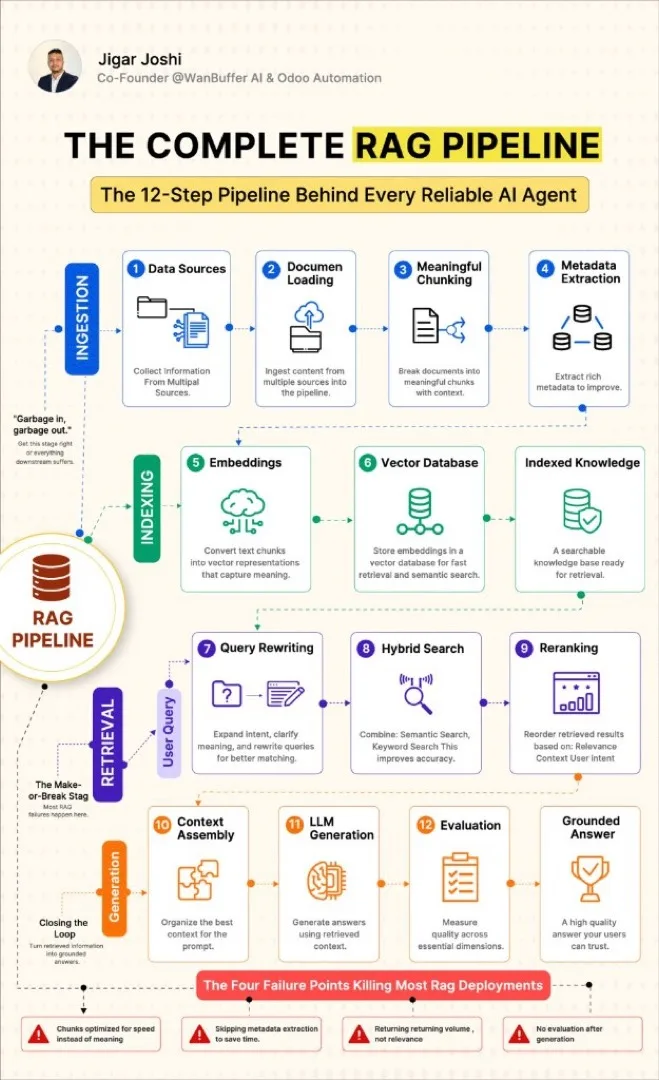
Google Research shipped Agentic RAG on Gemini Enterprise with a Sufficient Context Agent that refuses to answer when retrieval is incomplete. On factuality benchmarks they report up to 34% higher accuracy versus standard RAG. Here is when one-shot RAG is still enough, when you need iterative retrieval, and how I wire the pattern without blowing latency budgets.
Microsoft published a 6-step playbook for rolling agents out across an enterprise, and the line that matters is "you do not need a bigger model, you need a better operating model." That matches what I see in consulting: the pilots that die do not die on model quality, they die on ownership, evals, and governance. Here is how I read the playbook for IT services teams, and the operating-model gaps that actually stall agent rollouts.
Strip the hype off an AI agent and four parts are left: a memory, a set of tools, a loop that decides what to do next, and a guardrail that vets every action before it runs. Here is what each part is for, the order they fail in, and where I have written about fixing each one.
Claude Code forgets your architecture, your decisions, and why you ruled things out the moment a session ends. The reliability tax is not tokens, it is re-establishing context every morning. Here is what persistent agent memory actually is, how an open-source engine like Cortex implements it, and how to evaluate a memory layer for your own agents.
A poisoned VS Code extension spent eighteen minutes on the marketplace and walked off with Claude Code credentials and MCP configs. The model was never the target. Your agent's supply chain is: the extensions, skills, MCP servers, tool definitions, and keys it is allowed to touch. Here is how I harden all four layers, and the checklist I run on every deployment.
The biggest revision of MCP since 1.0 locked as a release candidate on May 21. The protocol goes stateless, extensions move out of the core, and authorization finally speaks OAuth properly. Most of your servers keep working. Here is what actually changes, what breaks, and the migration I would run in the ten weeks before the final spec lands.
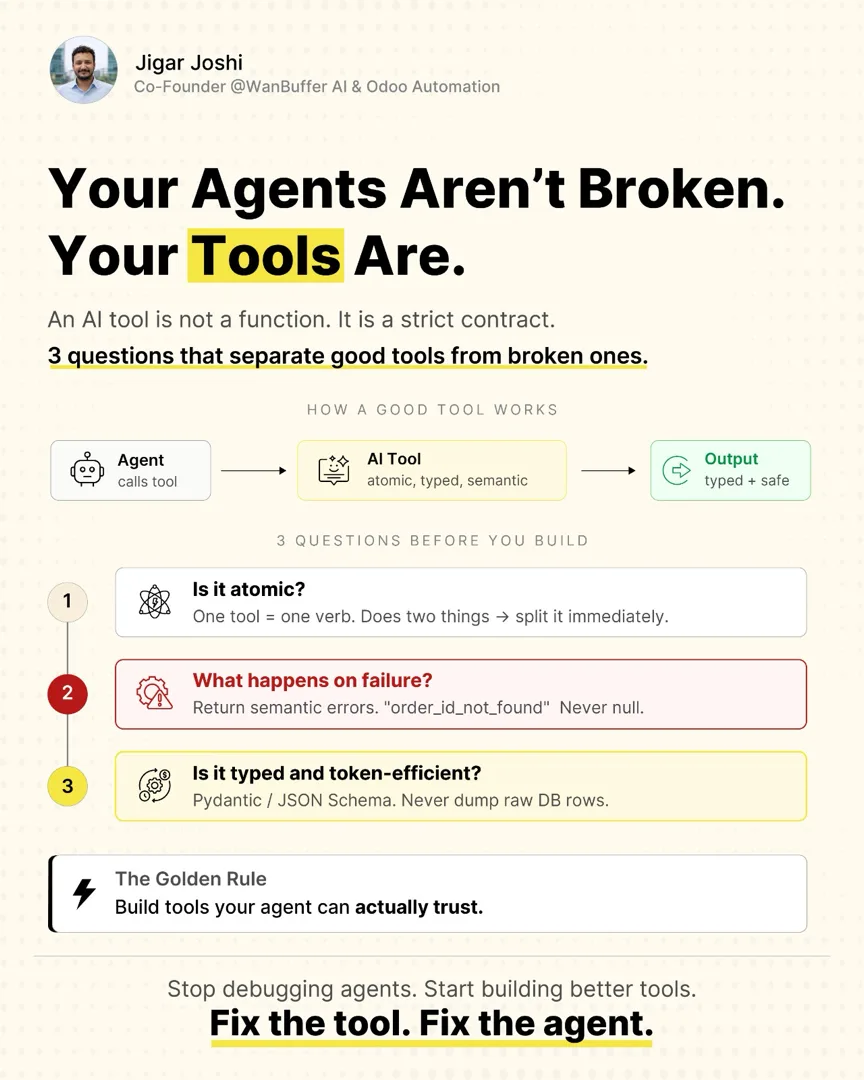
When an agent misbehaves, almost everyone reaches for the prompt or the model. The fault is usually further down, in a tool that does too much, lies when it fails, or buries the answer in a wall of raw data. An AI tool is not a function. It is a contract the model has to trust. Here are the three questions I run before writing a single line of any tool.
A working open studio that vets duplicates, plans the run, screens, scores, shortlists, and notifies. The whole pipeline lives in roughly ninety lines of supervisor code and a tool registry you can read in one sitting. Here is what is inside, why every piece is there, and what you can copy into your own stack.
Open Recruiting Atelier and you do not see a generic AI dashboard. You see five named specialists doing the work a screening team would do: catching duplicates, checking the brief, scoring on four dimensions, ranking, drafting the dispatch. Drop one CV or fifty. Click any candidate to see exactly why they landed where they did. This is what AI for recruitment looks like when it respects your judgment instead of replacing it.
Two ways to let an agent act in the world. Code agents write fresh code into a sandbox. Skill agents pick from a curated menu. The choice should be made in the kickoff, not the postmortem. Here is the framing I use with clients, the four axes where they diverge, and the hybrid pattern most production systems become.
I reviewed a system last month with 47 tools in its registry and a 22 percent wrong-tool-selection rate. The team was about to migrate from Sonnet to Opus to fix it. The prompt was fine. The registry was the bug. This is the audit pattern I run on every client codebase before we change anything else, the seven failure modes I see in production, and the numbers from the cleanup.
Vendors blur the line because "agentic" sells. The two terms describe different architectures, with different cost shapes, different observability needs, and different scoping conversations. Here is the framing I use with clients and the three-question test for which one your project actually needs.
Google shipped 3.5 Flash this week with a "frontier intelligence plus action" pitch and a 4x output-tokens-per-second claim. If your routing layer is on Sonnet 4.6 today, this is the week to re-benchmark. Here is what I am actually moving, what I am leaving alone, and the cost-per-completed-task maths nobody is doing in public.
Every enterprise MCP deployment I have audited in the last six months has been hand-rolling tool-access policy, payload logging, and per-team cost limits on top of a gateway someone wrote in two days. Databricks just shipped that as a product. Here is what it actually changes, where the gaps still are, and the migration I would run for a Databricks shop.
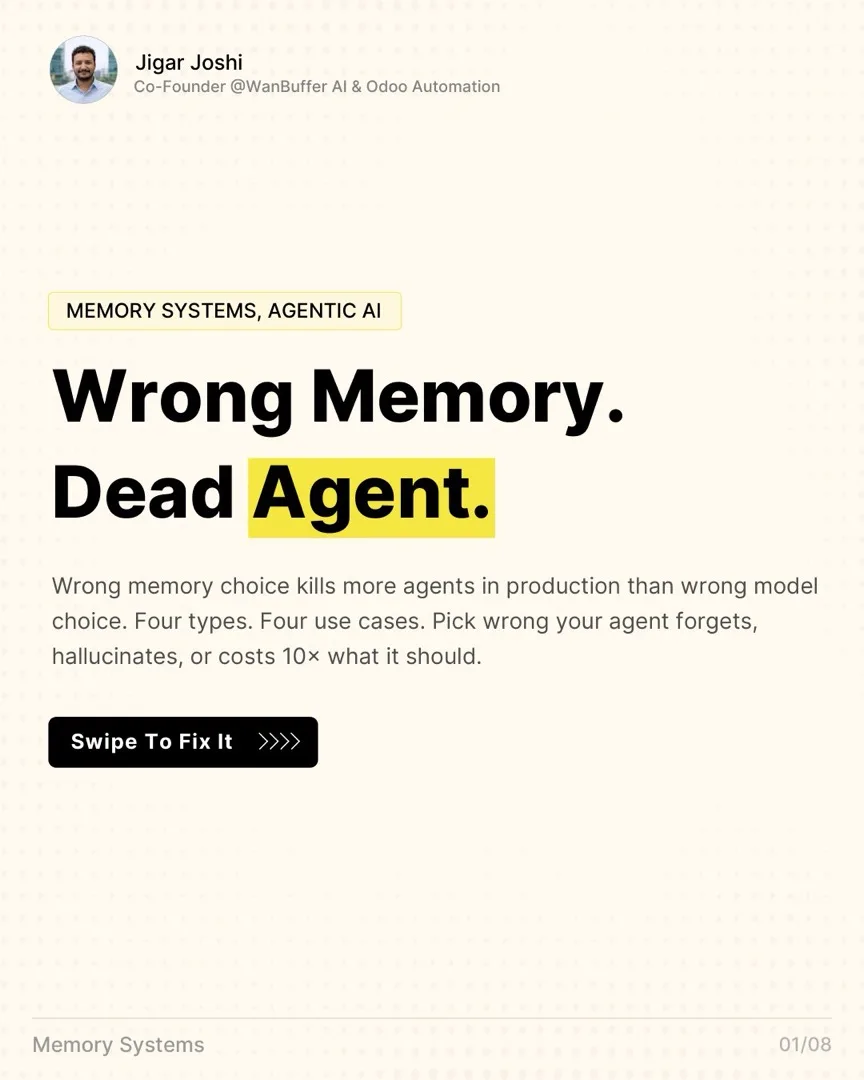
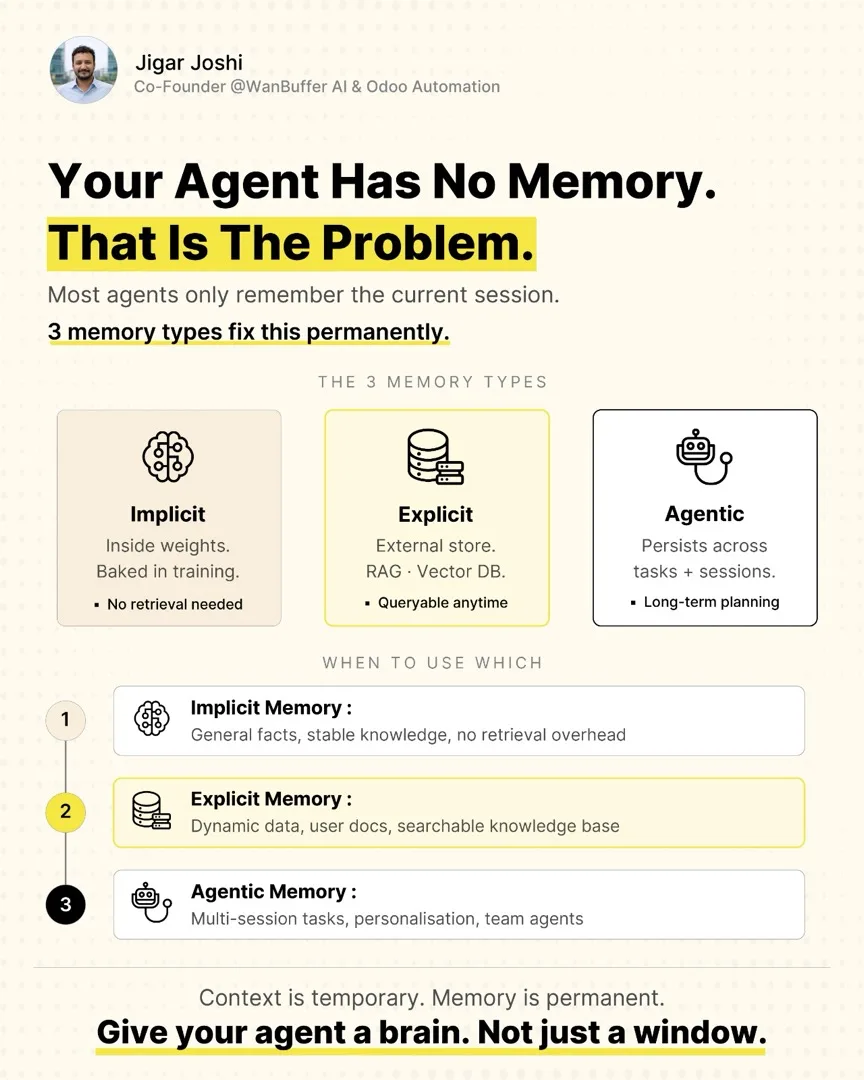
A new survey from BigAI-NLCO splits LLM memory into three layers. Most production agents I review have built the middle one, called it memory, and skipped the layer on top. Here is what the taxonomy actually buys you.
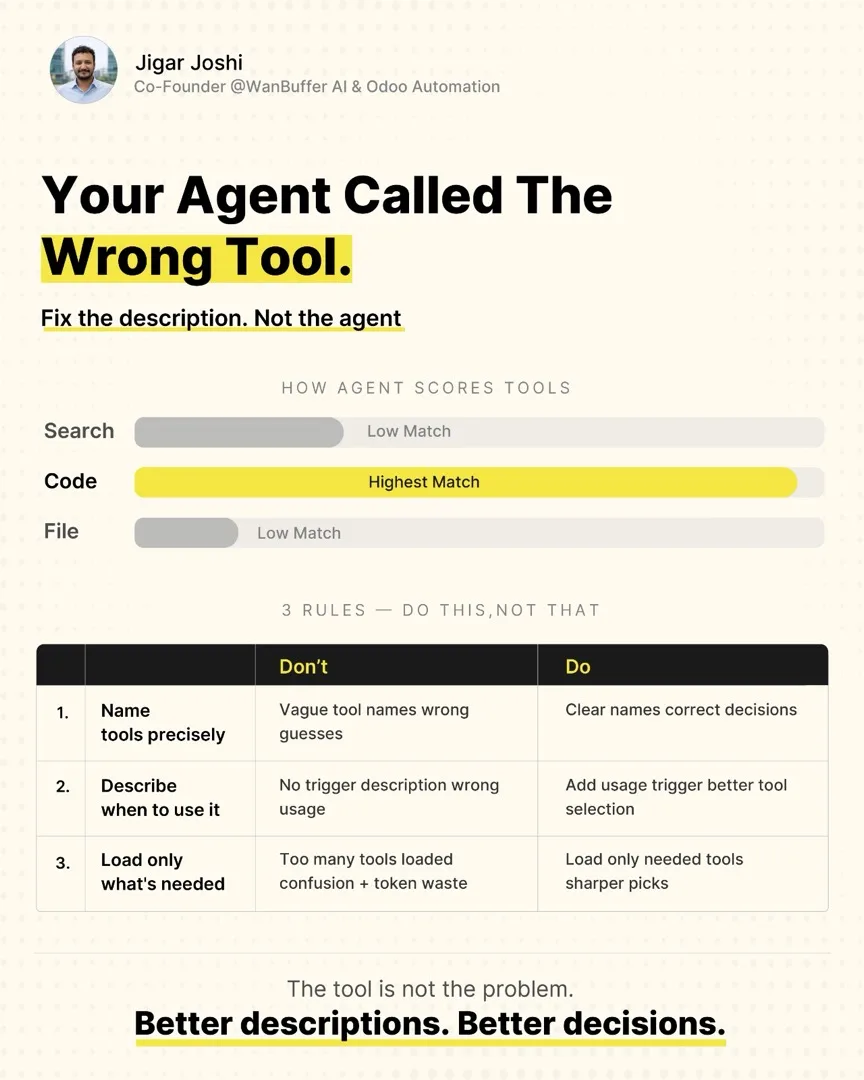
When an agent picks the wrong tool, the registry is broken, not the agent. Three rules I now apply before debugging anything in a multi-tool system: precise names, "when to use" triggers, and a curated load list. Anthropic's new tool-selection telemetry finally puts numbers on what changes accuracy.
GitHub published an instrumented analysis of their agentic CI workflows and reported 19-62% token-cost reductions. The savings are the headline. The technique (pre-agentic data fetching and tool-registry hygiene) is the story most teams will miss.
A million tokens reliably is real now, but it does not retire RAG. It changes the calculus. Cost, latency, recency, and the prompt-cache angle nobody is talking about.
The protocol stabilised. Most working servers will keep working. Three places the new spec actually requires changes (auth profile, server registry, streaming-response semantics) with diffs from a real migration.
Supervisors looked clean on paper and shipped slow in production. Handoffs read messier in the code but recover better when an agent loses the plot. Two real systems and where supervisors still earn their keep.
A walkthrough from a client engagement: identifying stable prefixes, restructuring the system prompt for cacheability, and the telemetry that proved caching was actually working.
A docstring tells a developer what a function does. A tool description tells a model when to call it. Different audience, different writing. Six concrete edits that lifted tool-call accuracy.
Traces, spans, evals, cost-per-completed-task, and the one dashboard panel that catches 80% of regressions. Vendor-agnostic; covers Langfuse, Honeycomb, and rolling your own.
Self-correction loops without budgets, single-agent solutions to multi-domain problems, and using JSON mode to force structure I should have built into the schema. An honest review.
Replacing Sonnet with Haiku in the dispatcher role cut our orchestration cost dramatically. It also cost us in two specific places I did not predict.
Smallest useful server. Hardest one to mess up. Teaches the protocol without distracting domain logic. The 60-line server we hand to teams during training.
If your eval set is the demos you showed the client, you are testing the wrong thing. How we build evals from production failures and the minimum viable suite to ship.
For two years I told teams to avoid forced JSON outputs and use structured tool calls. That was right then and partially wrong now. Schema enforcement got better, latency penalties got smaller.
The exit condition problem nobody talks about. Most agents are built for the happy path, where every tool call succeeds and the task completes cleanly. Real production agents are different.
One tool, one purpose. Every tool that does two things will fail you on the third call. I have watched this pattern fail in every team I have trained, and the fix is the same refactor.
A decision framework from real implementations. RAG retrieves. CAG stores in cache. Knowing which to use, and when to combine both, determines whether your agent finds the right answer at the right cost.
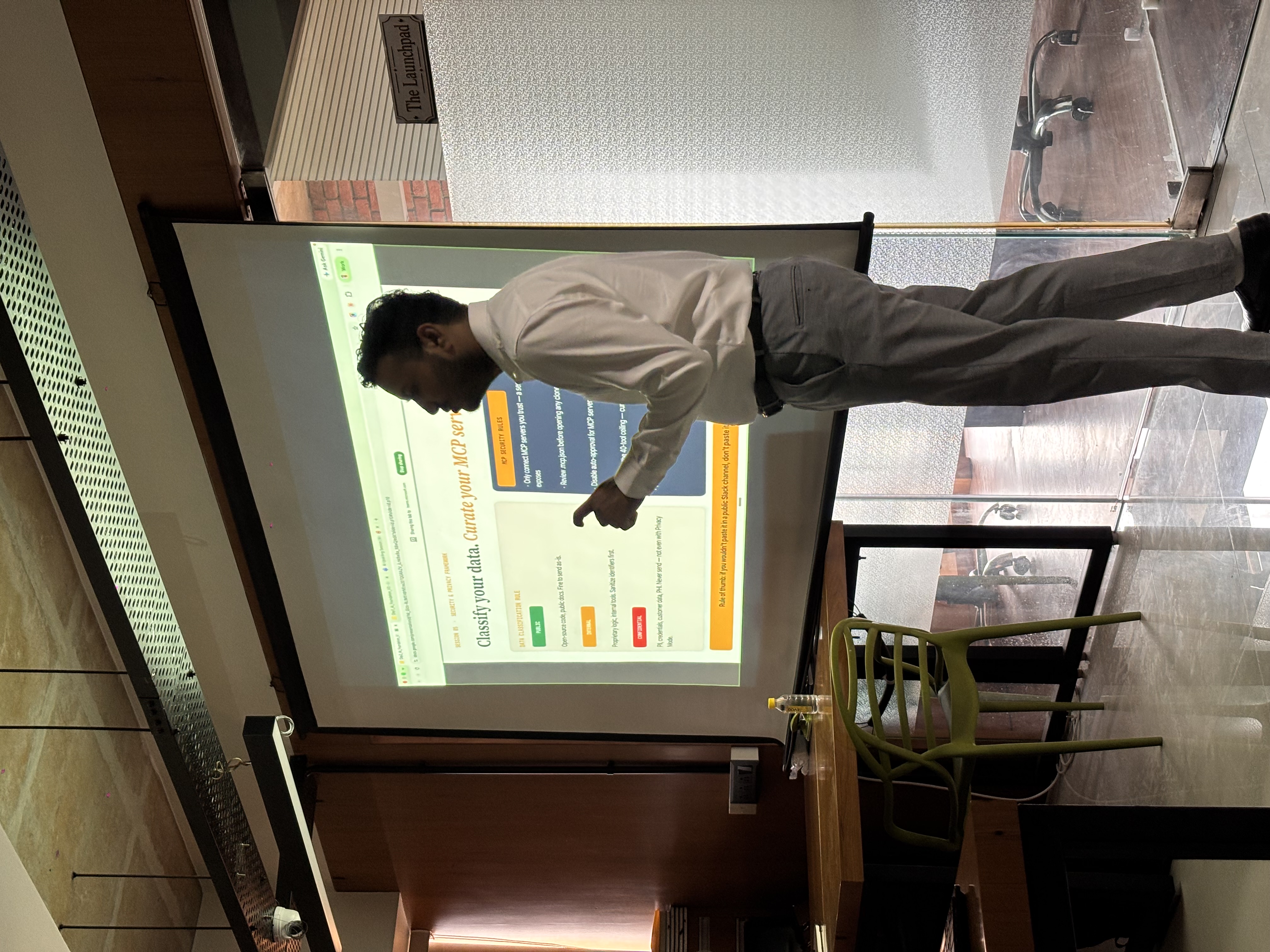
Program 01 · 2-day corporate cohort
View recap & resources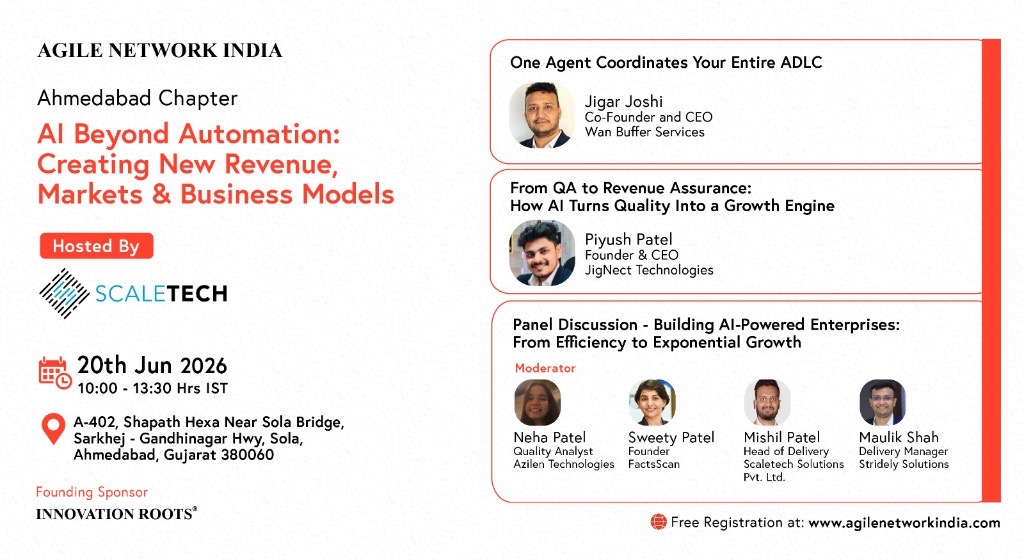
One Agent Coordinates Your Entire ADLC
View recap & resources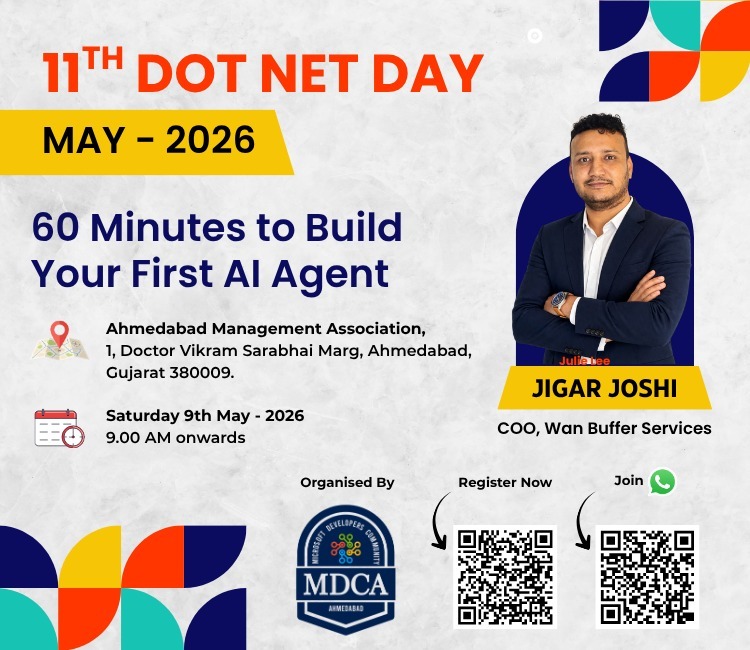
60 Minutes to Build Your First AI Agent
View recap & resources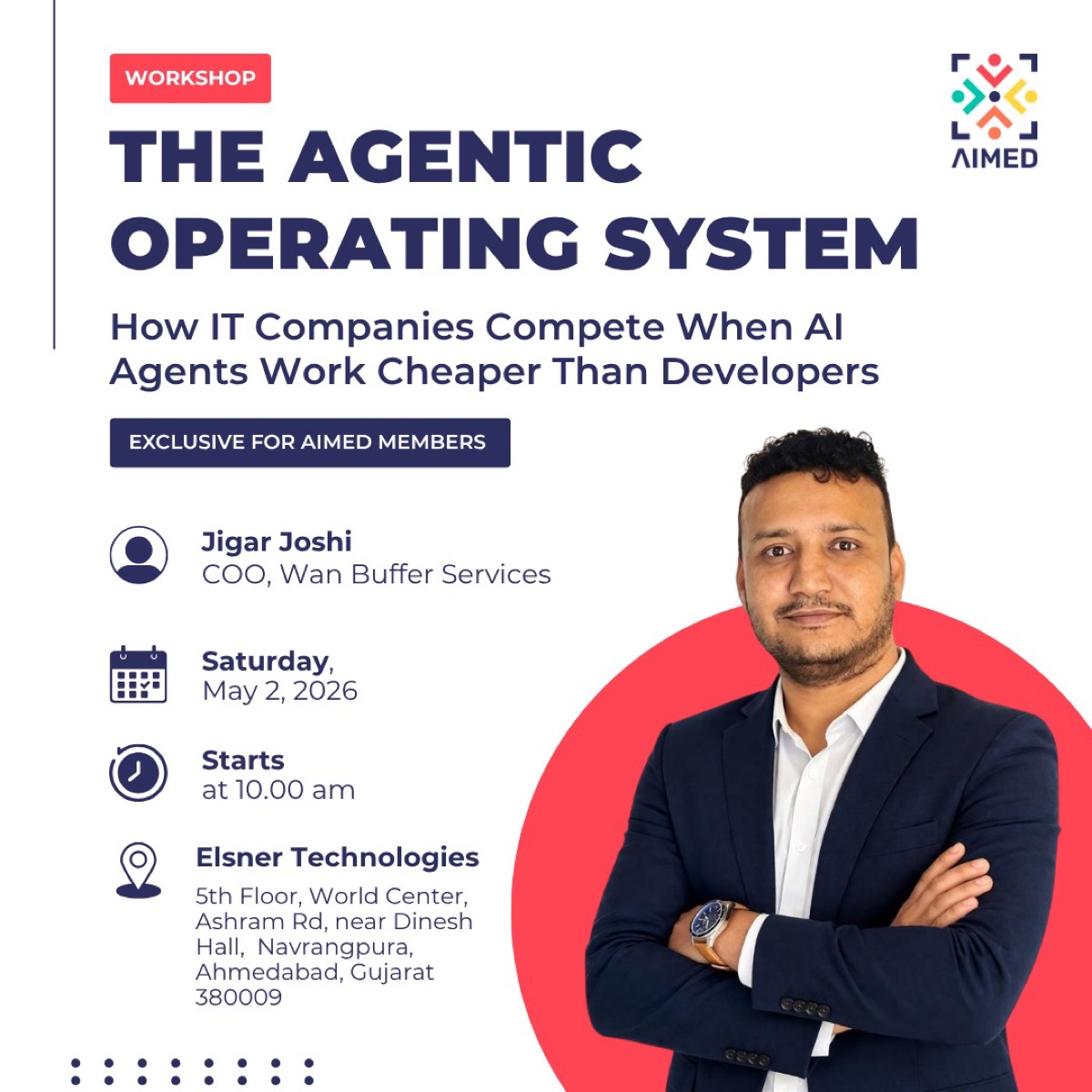
How IT Companies Compete When AI Agents Work Cheaper Than Developers
View recap & resourcesThe pages below are the buyer-focused, conversion-grade versions of this topic — deliverables, methodology, ROI, security considerations, and CTAs to scope a real engagement.
Designed, built, and handed off — production agentic systems for enterprise teams.
Explore the Agentic AI Consulting solutionCustom Model Context Protocol servers that turn your systems into agent tools.
Explore the MCP Integration solutionMulti-layer safety, policy, and audit controls for agents in regulated environments.
Explore the AI Guardrails solutionEight-day corporate training programs that take dev teams from AI-assisted coding to production agentic systems.
Explore the AI Systems Engineering Training solutionReference architectures for organisations standing up an AI platform — not one agent, but the foundation for many.
Explore the Enterprise AI Architecture solutionTracing, eval, cache-hit telemetry, and cost attribution for production agents.
Explore the AI Observability solutionSupervisor + handoff orchestration for portfolios of agents that need to cooperate without arguing.
Explore the Multi-Agent Workflows solutionOperational agents that replace manual workflows — triage, support, ERP integration, content pipelines.
Explore the AI Automation for Enterprises solutionTwo tracks — one for developers who build agents, one for business teams who use them. Customised to your stack, hands-on from session 1.
See Agentic AI training tracksArchitecture design, production implementation on Claude API and MCP, full observability, and a real handoff. Working agents, not slides.
Explore Agentic AI consultingThe open protocol that gives agents tools.
Orchestrating many agents without losing the plot.
Building production agents on Anthropic's Claude.
Tracing, eval, and telemetry for production agents.
The discipline of shipping AI systems, not demos.
Operational agents for IT services and enterprise teams.
New breakdowns on this and related agentic AI topics, plus what I am shipping for clients — one email on Thursdays.