Introduction
Most multi-step agents are polite queues. A then B then C, even when half the waits carry no data. The infographic above is the redraw I use on whiteboards: vertical workflow on the left, step cards side by side on the right, four phases from seeing the graph to letting Claude draw it.
This is not Neo4j and not knowledge-graph RAG. It is workflow topology on Claude Code dynamic workflows. For the full 14-step write-up with JavaScript patterns, barrier vs pipeline, and a five-day engagement plan, read graph engineering with Claude Code.
Phase 01: See the graph
Redraw the chain. Nodes are jobs. Chains are already graphs (usually degenerate ones). Give every node a contract (bounded in, validated out). Treat every edge as a data contract. If you cannot draw an arrow because no variable crosses, the two boxes are independent.
Phase 02: Spread the work
Run it all at once. Fan out with parallel(). Fan in at a barrier only when the next stage needs the whole set. The diamond (split → work → merge) is the workhorse. Conditional routing: Claude classifies at the node, code picks the edge.
Phase 03: Make it survive
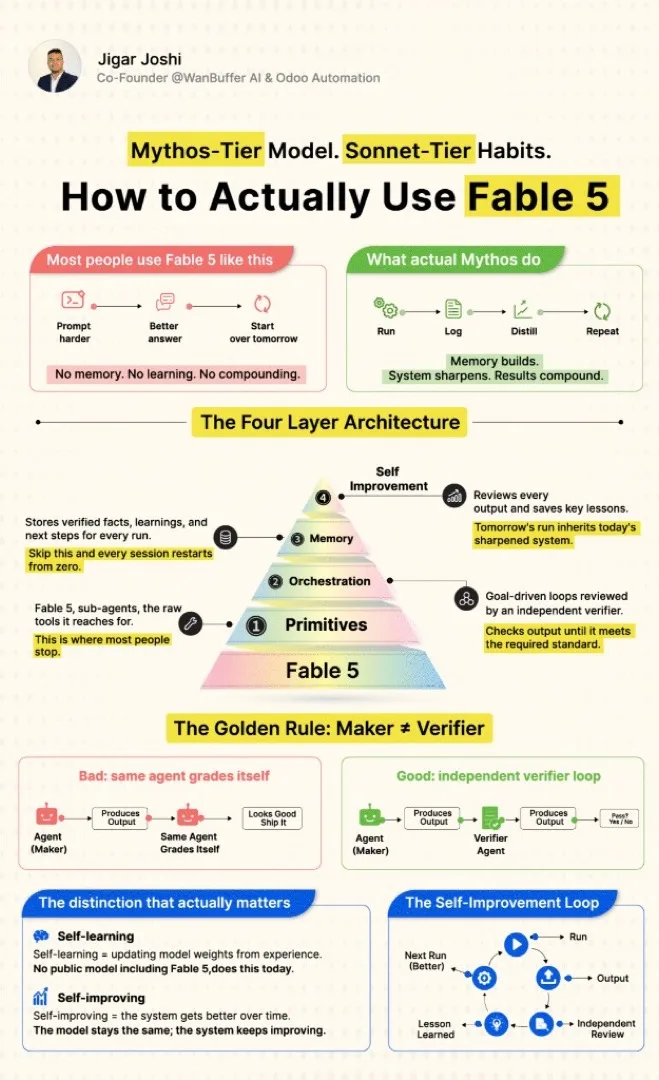
One failure cannot spread. Put a verifier on the edge (maker ≠ verifier). Isolate every node, especially parallel writers. Cycles are allowed only when they converge (loop-until-dry against everything seen). Same rule as independent verifier loops.
Phase 04: Tune and automate
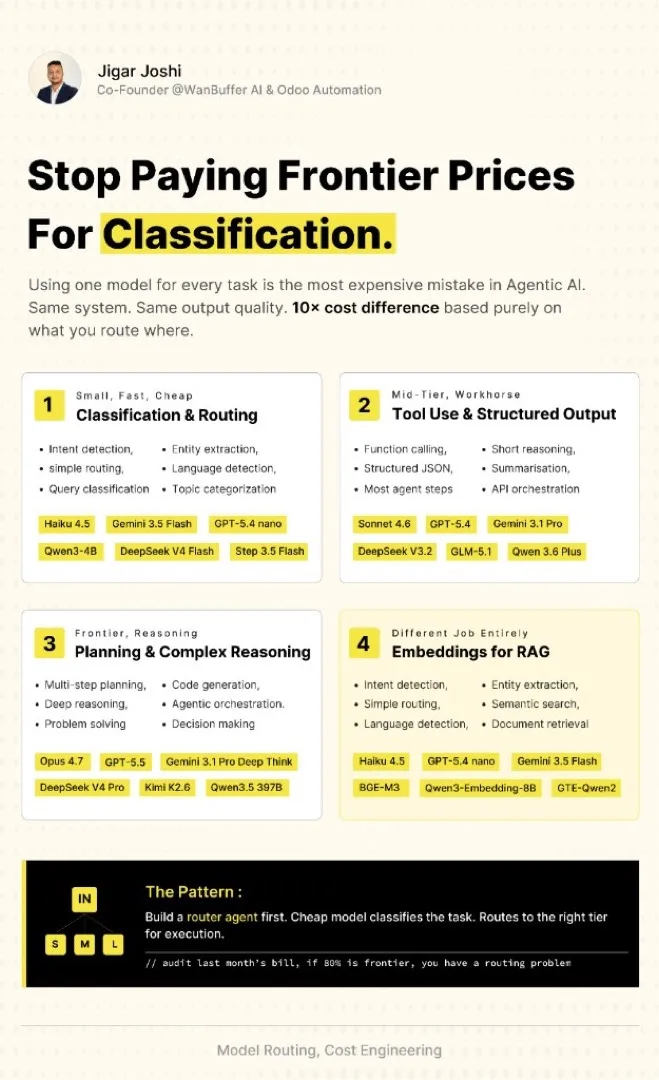
Cheap, fast, hands-off. Tier models across nodes. Topology is your cost and latency. Let Claude draw the graph: ask for a workflow, run /deep-research, or use ultracode, then save the script into .claude/workflows/.
Conclusion
Stop drawing the agent as a line. Use this note as the shareable map. Use the companion blog when you need contracts, code, and rollout discipline.